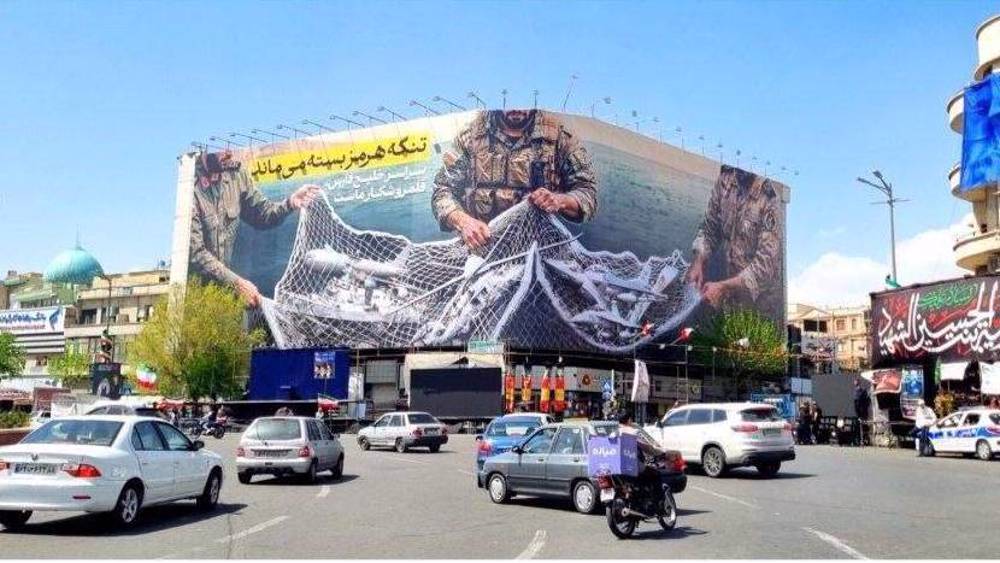


Disruption of fertilizer flows through the Strait of Hormuz could slash harvests, Jose Andres of World Central Kitchen has warned.
Disruptions to fertilizer supplies caused by the US-Israeli war on Iran risk triggering a multi-year food crisis globally, World Central Kitchen (WCK) founder Jose Andres has warned.
Tensions around the Strait of Hormuz have already driven up energy prices and rattled the global economy, disrupting one of the world’s most important trade arteries. The route handles around 20% of global crude exports, but it is also critical for shipments of nitrogen-based fertilizers.
Speaking to The Guardian on Thursday, Andres said delays in fertilizer deliveries risk missing critical planting windows, reducing yields in subsequent harvests and fueling a chain reaction of lower output and higher food prices.
“It is not only oil that leaves through the Strait of Hormuz. I foresee a very big increase in famine across the world by the fall of 2026 and 2027,” he said, warning that shipping turmoil in and around Hormuz is already tightening fertilizer supplies and pushing up costs for farmers.
The conflict has also led to reported shutdowns of fertilizer plants across the Gulf, further straining supply. Nitrogen fertilizers account for the majority of global use and underpin roughly half of the world’s food production. With the Gulf acting as a key export hub, disruptions to maritime routes have intensified shortages during the peak planting season.
Andres warned that poorer nations would bear the brunt. “In places like Haiti, they don’t serve you a kilo of rice, they serve you one ounce at a time. Those people are going to be suffering the consequences,” he said, suggesting governments allocate a small share of national budgets toward food security.
A UN Development Program report estimates that up to 32 million people could be pushed into poverty across 162 countries due to the Middle East war’s wider economic impact, with import-dependent nations facing the greatest strain. The heaviest burden is expected in parts of Asia, Sub-Saharan Africa, and small island states.

US Army Secretary Dan Driscoll is preparing to leave the Trump administration after what a new report has described as months of tension with Secretary of War Pete Hegseth, potentially triggering another change at the army’s top echelons.
According to the Friday report by The Wall Street Journal, Driscoll is expected to step down before the end of the year and could leave his post earlier. The newspaper cited people familiar with discussions over his departure.
The Journal reported that Driscoll and his family vacated the official residence assigned to the army secretary at Joint Base Myer-Henderson Hall this summer, a move that could indicate he was preparing to leave the position.
The reported departure would come at a time of continuing uncertainty at the top echelons of the army.
Hegseth abruptly removed Army Chief of Staff Gen. Randy George in April, while Trump has not yet nominated a permanent successo....more below
...
The Islamic Revolution Guards Corps (IRGC) warns the enemies that any act of aggression against the Islamic Republic will not go unanswered.
In a statement on Thursday, the IRGC issued a “stern warning” to the enemies after US forces launched strikes against the southern Iranian port city of Bandar Abbas.
Following the US military attack on a point on the outskirts of Bandar Abbas Airport with aerial projectiles, the IRGC carried out new strikes targeting the US air base from which the attack originated in the wee hours of Thursday, it added.
“This response is a serious warning to the enemy that they should know the act of aggression will not go unanswered,” the IRGC emphasized.
The elite military force warned of a “more decisive” response if the enemy repeated any act of aggression.
It also said the responsibility for the consequences of any IRGC response lies with the aggressor.
The statement comes after the IRGC Navy on Thursday forced an American tanker to turn back. The tanker ...