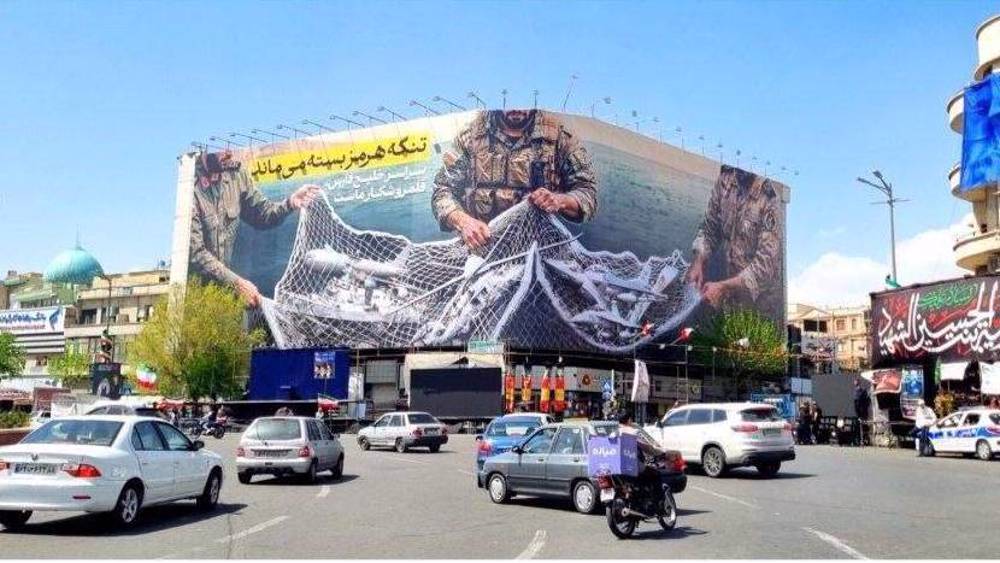


By Prof Rodrigue Tremblay
Global Research
“When every country turned to protect its own private interest, the world public interest went down the drain, and with it the private interests of all.”
—Charles Kindleberger (1910-2003), American economic historian, (in his book ‘The World Depression 1929-1939’, 1973.
“We are in the midst of a rupture, not a transition… More recently, great powers have begun using economic integration as weapons, tariffs as leverage. Financial infrastructure as coercion. Supply chains as vulnerabilities to be exploited, You cannot live within the lie of mutual benefit through integration when integration becomes the source of your subordination… If we are not at the table, we are on the menu.”
—Mark Carney (1965- ), economist and Prime minister of Canada, in Davos, Switzerland, January 20, 2026.
“In the Great Depression in which I grew up and remember vividly, unemployment was over 25 percent, and over 35 percent where I lived. A grown man would work all day, 16 hours, for a dollar. I remember hundreds of people walking by, people who had come down from the North just to get warm. They would come to our house as beggars even though they might have a college education. People didn’t have money.”
—Jimmy Carter (1924-2024), 39th U.S. president (1977-1981), (in an interview with the St. Louis Post-Dispatch, on Feb. 4, 2009).
One year before the end of World War II, in 1944, representatives of some 44 countries met in an American town in New Hampshire and cooperated in establishing a new global monetary system based on the U.S. dollar, which was to be convertible into a fixed weight of gold. (Note: The U.S. then possessed 70% of the world’s gold reserves.)
This system lasted until 1971, when the Republican administration of Richard Nixon unilaterally severed the link between gold and the dollar, making the latter a purely fiat currency—that is, a currency entirely based on confidence in the U.S. monetary authorities to maintain its relative value.
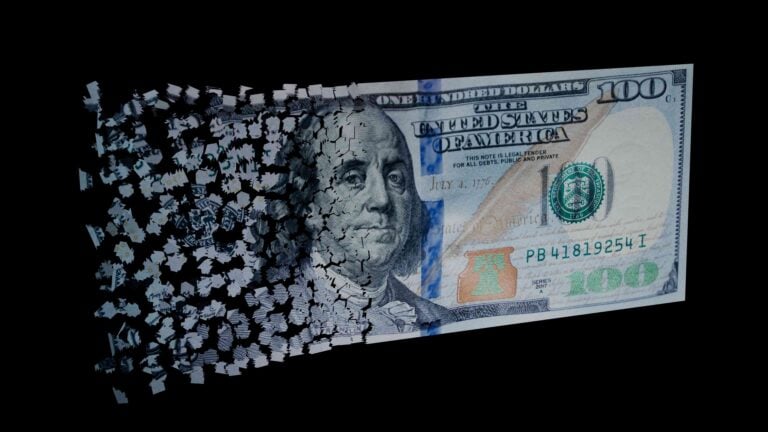
Fifty-five years later, in 2026, the world is once again faced with the task of adjusting the international monetary system to new realities, but this time without a shred of international cooperation. On the contrary, the current Trump administration does not hesitate to insult, antagonize and sometimes threaten allied nations, many of which are public and private creditors of the American federal government. To attack one’s lenders is generally not the most appropriate thing to do!
What was the Bretton Woods Monetary System
Since the Bretton Woods Conference of July 1944, it was agreed by 44 countries that the U.S. dollar would be used as the principal international means of payments in the post WWII international monetary system. It was going to be backed by gold at the rate of one dollar being exchanged for 1/35 ounce of gold, (one ounce of gold being worth $35).
Other national currencies would have a fixed exchange rate vis-à-vis the dollar, to be adjusted only for structural balance of payments deficits or surpluses, as monitored by the newly created International Monetary Fund (IMF). Moreover, central banks would purchase and hold mainly American Treasury bonds as liquidity reserves to stabilize their currencies.
Why the international monetary system based on a fiat U.S. dollar has provided the United States with some exorbitant economic privileges
For many years, that one-sided international monetary system has created some exorbitant privileges for the United States.
Indeed, under such a system, the U.S. could not face a balance of payments problem because it was paying its imports with its own currency, which it could print at will.....more below
https://www.globalresearch.ca/coming-changes-international-monetary-system-dedollarization/5915570
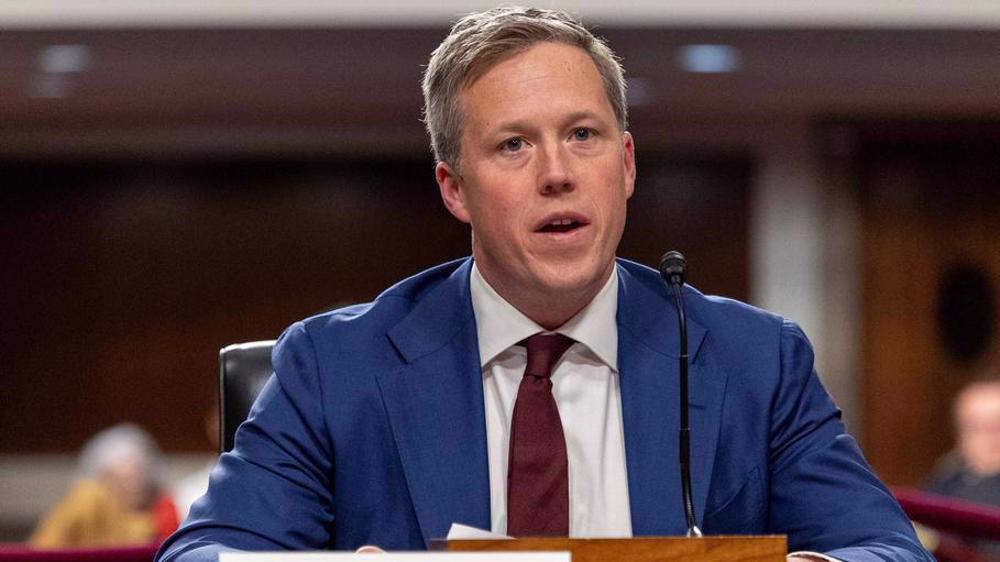
US Army Secretary Dan Driscoll is preparing to leave the Trump administration after what a new report has described as months of tension with Secretary of War Pete Hegseth, potentially triggering another change at the army’s top echelons.
According to the Friday report by The Wall Street Journal, Driscoll is expected to step down before the end of the year and could leave his post earlier. The newspaper cited people familiar with discussions over his departure.
The Journal reported that Driscoll and his family vacated the official residence assigned to the army secretary at Joint Base Myer-Henderson Hall this summer, a move that could indicate he was preparing to leave the position.
The reported departure would come at a time of continuing uncertainty at the top echelons of the army.
Hegseth abruptly removed Army Chief of Staff Gen. Randy George in April, while Trump has not yet nominated a permanent successo....more below
...
The Islamic Revolution Guards Corps (IRGC) warns the enemies that any act of aggression against the Islamic Republic will not go unanswered.
In a statement on Thursday, the IRGC issued a “stern warning” to the enemies after US forces launched strikes against the southern Iranian port city of Bandar Abbas.
Following the US military attack on a point on the outskirts of Bandar Abbas Airport with aerial projectiles, the IRGC carried out new strikes targeting the US air base from which the attack originated in the wee hours of Thursday, it added.
“This response is a serious warning to the enemy that they should know the act of aggression will not go unanswered,” the IRGC emphasized.
The elite military force warned of a “more decisive” response if the enemy repeated any act of aggression.
It also said the responsibility for the consequences of any IRGC response lies with the aggressor.
The statement comes after the IRGC Navy on Thursday forced an American tanker to turn back. The tanker ...