

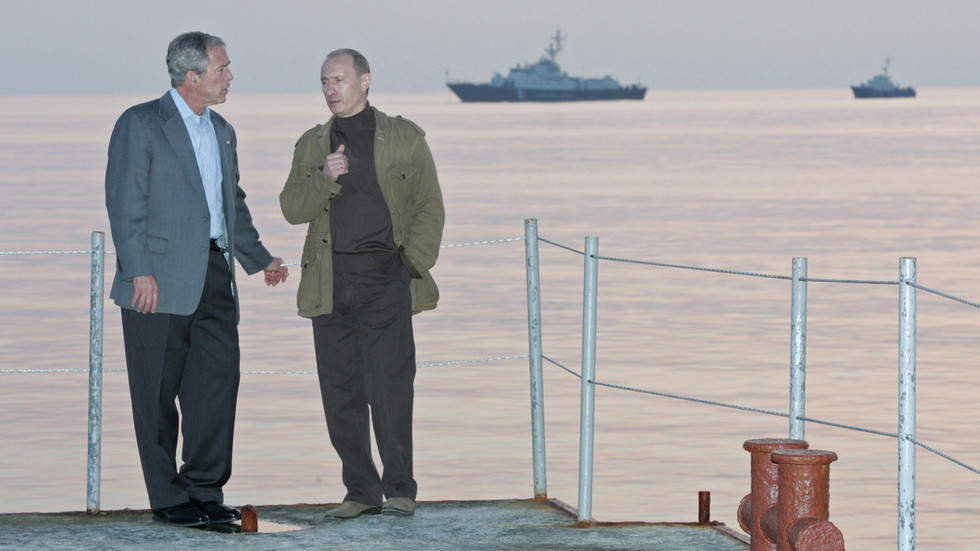
The Russian leader said in 2008 that it could lead to “long-term conflict” with Washington, according to transcripts of the talks
Russian President Vladimir Putin warned his then-US counterpart, George W. Bush, almost two decades ago that attempts to make Ukraine a member of NATO could split the country apart and result in a confrontation between Moscow and Washington, records of conversations between the two leaders have revealed.
On Tuesday, the US National Security archives published verbatim transcripts of several exchanges between Putin and Bush throughout the 2000s.
During their first meeting in Slovenia in June 2001, the Russian president questioned the need for NATO’s enlargement, but stressed that he “can imagine us [Moscow and Washington] becoming allies,” according to the files.
His tone stiffened significantly by the time of their last meeting in the Russian city of Sochi in April 2008, a year after Putin delivered his famous speech at the Munich Security Conference, criticizing the unipolar world order and NATO’s eastward expansion.
Putin straightforwardly told Bush that “accession to NATO of a country like Ukraine will create for the long-term a field of conflict for you and us, long-term confrontation,” the transcript read.
Ukrainian membership in the bloc would create “uncertainties and threats” for Russia in the form of Western military bases and new weapon systems being deployed near its borders, Putin explained.
”NATO is perceived by a large part of the Ukrainian population as a hostile organization… And relying on the anti-NATO forces in Ukraine, Russia would be working on stripping NATO of the possibility of enlarging. Russia would be creating problems there all the time,” the Russian leader reportedly said......more below
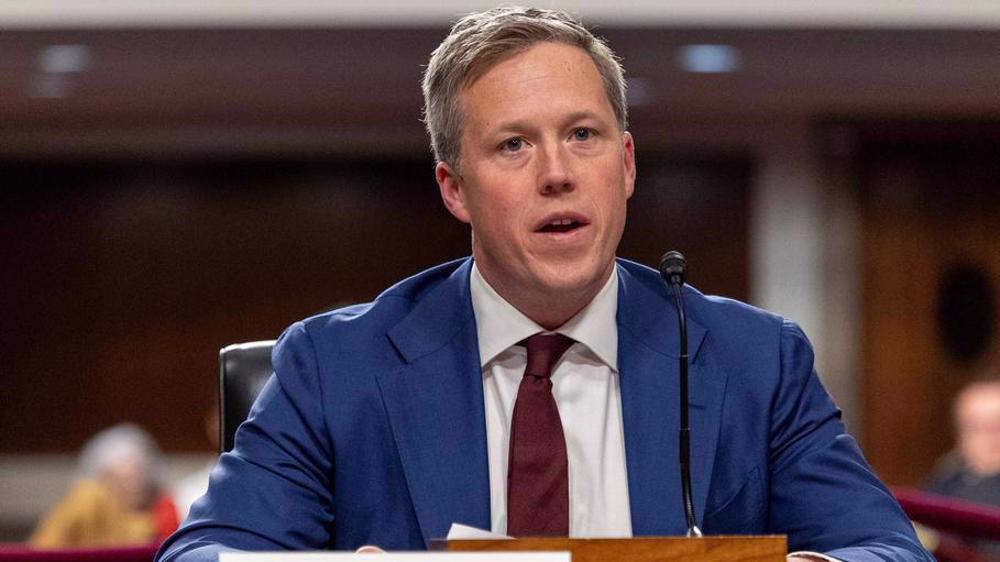
US Army Secretary Dan Driscoll is preparing to leave the Trump administration after what a new report has described as months of tension with Secretary of War Pete Hegseth, potentially triggering another change at the army’s top echelons.
According to the Friday report by The Wall Street Journal, Driscoll is expected to step down before the end of the year and could leave his post earlier. The newspaper cited people familiar with discussions over his departure.
The Journal reported that Driscoll and his family vacated the official residence assigned to the army secretary at Joint Base Myer-Henderson Hall this summer, a move that could indicate he was preparing to leave the position.
The reported departure would come at a time of continuing uncertainty at the top echelons of the army.
Hegseth abruptly removed Army Chief of Staff Gen. Randy George in April, while Trump has not yet nominated a permanent successo....more below
...
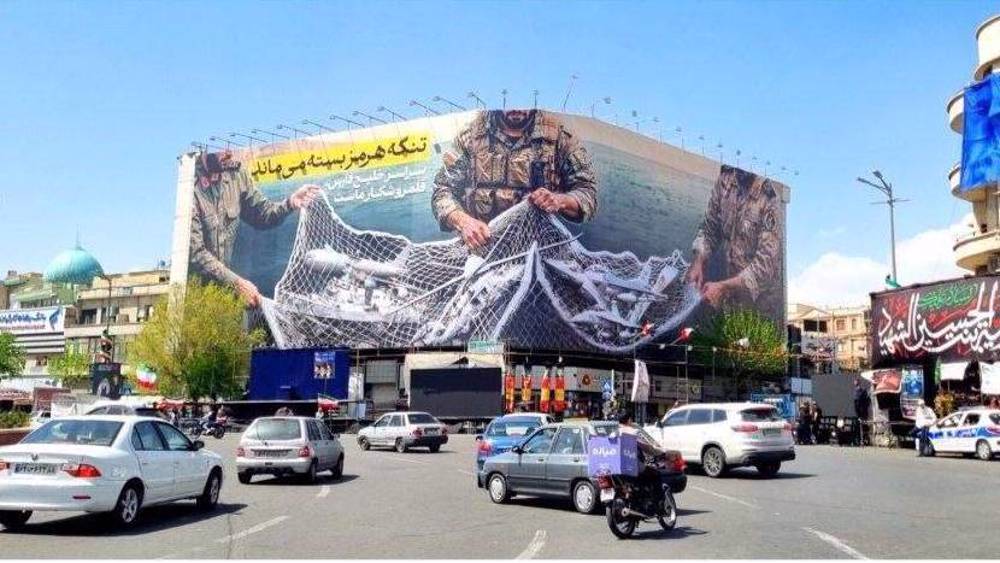
The Islamic Revolution Guards Corps (IRGC) warns the enemies that any act of aggression against the Islamic Republic will not go unanswered.
In a statement on Thursday, the IRGC issued a “stern warning” to the enemies after US forces launched strikes against the southern Iranian port city of Bandar Abbas.
Following the US military attack on a point on the outskirts of Bandar Abbas Airport with aerial projectiles, the IRGC carried out new strikes targeting the US air base from which the attack originated in the wee hours of Thursday, it added.
“This response is a serious warning to the enemy that they should know the act of aggression will not go unanswered,” the IRGC emphasized.
The elite military force warned of a “more decisive” response if the enemy repeated any act of aggression.
It also said the responsibility for the consequences of any IRGC response lies with the aggressor.
The statement comes after the IRGC Navy on Thursday forced an American tanker to turn back. The tanker ...