

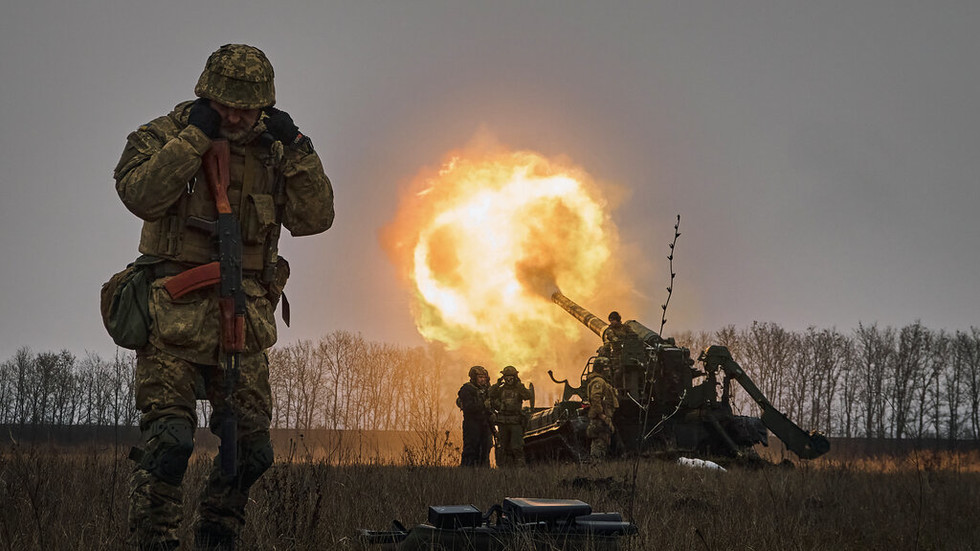
The bloc could help end the conflict, at any time, by addressing the issues around its plans for further expansion
By Glenn Diesen, Professor at the University of South-Eastern Norway and an editor at the Russia in Global Affairs journal.
The Western public, like others, are justly appalled by the human suffering and the horrors of the Ukrainian war. Empathy is one of the great virtues of humanity, which in this instance translates into the demand for helping Ukrainians. Yet, propaganda commonly weaponizes the best in human nature, such as compassion, to bring out the worst. As sympathy and the desire to assist the displaced are used to mobilize public support for confrontation and war with Russia, it is necessary to ask if the Western public and Ukrainians are being manipulated to support a proxy war.
Is NATO helping Ukraine to fight Russia or is NATO using Ukraine to fight Russia?
The organization as a passive actor?
The US-led military bloc commonly depicts itself as an innocent third party that merely responds to the overwhelming desire of the Ukrainian people to join its ranks. Yet, for years NATO has attempted to absorb a reluctant Ukraine into its orbit. A NATO publication from 2011 acknowledged that “The greatest challenge for Ukrainian-NATO relations lies in the perception of NATO among the Ukrainian people. NATO membership is not widely supported in the country, with some polls suggesting that popular support for it at is less than 20%”.
In 2014, this problem was resolved by supporting what Statfor’s George Friedman labelled “the most blatant coup in history” as there were no efforts to conceal Western meddling. Regime change was justified as helping Ukrainians with their “democratic revolution”. Yet, it involved the unconstitutional removal of the elected government as a result of an uprising that even the BBC acknowledged did not have majority support amongst the general public. The authorities elected by the Ukrainian people were replaced by individuals handpicked by Washington. An infamous leaked phone call between State Department apparatchik Victoria Nuland and Ambassador Geoffrey Pyatt revealed that Washington had chosen exactly who would be in the new government several weeks before they had even removed president Yanukovich from power.
Donbass predictably rejected and resisted the legitimacy of the new regime in Kiev with the support of Russia. Instead of calling for a “unity government”, a plan for which Western European states had signed as guarantors, NATO countries quietly supported an “anti-terrorist operation” against eastern Ukrainians, resulting in at least 14,000 deaths.
The Minsk-2 peace agreement of February 2015 produced a path for peace, yet the US and UK sabotaged it for the next 7 years. Furthermore, Germany’s Angela Merkel and France’s Francois Hollande recently admitted that both Germany and France considered the deal an opportunity to buy time for Ukraine to arm itself and prepare for war.
In the 2019 election, millions of Ukrainians were disenfranchised, including those living in Russia. Nevertheless, the result was a landslide with 73% of Ukrainians voting for Vladimir Zelensky’s peace platform based on implementing the Minsk-2 agreement, negotiating with Donbass, protecting the Russian language, and restoring peace with Moscow. However, the far-right militias that were armed and trained by the US effectively laid down a veto by threatening Zelensky and defying him on the front line when he demanded to pull back heavy weapons. Pressured also by the US, Zelensky eventually reversed the entire peace platform the Ukrainians had voted for. Instead, opposition media and political parties were purged, and the main opposition leader, Viktor Medvedchuk was arrested. Subverting the wishes of Ukrainians in order to steer the country towards confrontation with Russia was yet again referred to as “helping” Ukraine.
Towards proxy war
In 2019, the Rand Corporation published a 325-page report ordered by the US Army titled “Extending Russia: Competing from Advantageous Ground”. In the language of a proxy war, the report advocated arming Ukraine to bleed Moscow stating, “Providing more U.S. military equipment and advice could lead Russia to increase its direct involvement in the conflict and the price it pays for it”. The US Chair of the House Intelligence Committee, Adam Schiff, similarly explained in 2020 the strategy of arming Ukraine claiming, “The United States aids Ukraine and her people so that we can fight Russia over there and we don't have to fight Russia here”.
In December 2021, the former head of Russia analysis at the CIA warned that the Kremlin was under growing pressure to invade to prevent Washington from further building up its military presence on its borders, which included modernising Ukrainian ports to fit US warships. “That relationship [US-Ukraine] will be far stronger and deeper, and the United States military will be more firmly entrenched inside Ukraine two to three years from now. So inaction on [the Kremlin’s] part is risky," George Beebe explained. Yet, despite being convinced that Russia would invade, Washington refused to give any reasonable security guarantees to Moscow.
Kiev agreed to enter into negotiations merely three days into the Russian invasion, which resulted in a peace agreement outline a few weeks later. Former intelligence official Fiona Hill and Angela Stent later penned an article acknowledging that “Russian and Ukrainian negotiators appeared to have tentatively agreed on the outlines of a negotiated interim settlement: Russia would withdraw to its position on February 23, when it controlled part of the Donbass region and all of Crimea, and in exchange, Ukraine would promise not to seek NATO membership and instead receive security guarantees from a number of countries”.
However, after a visit by UK Prime Minister Boris Johnson, Kiev suddenly withdrew from the peace negotiations. Reports in the Ukrainian and American media have suggested that London and Washington had pressured Kiev to abandon negotiations and instead seek victory on the battlefield with NATO weapons.
Johnson gave multiple speeches warning against a “bad peace," while German General Harald Kujat, a former chairman of the NATO Military Committee, confirmed that Johnson had sabotaged the peace negotiations in order to fight a proxy war with Russia: “His reasoning was that the West was not ready for an end to the war”.
The American objectives also had seemingly little to do with “helping” Ukraine. US Secretary of Defense Lloyd Austin stated US goals in Ukraine as the weakening of a strategic rival: “We want to see Russia weakened to the degree that it can't do the kinds of things that it has done in invading Ukraine”. PresidentBiden argued for regime change in Moscow as Putin “cannot remain in power”, which was repeated by Boris Johnson’s op-ed stating that “The war in Ukraine can end only with Vladimir Putin’s defeat”.
US Congressman Dan Crenshaw advocated for a proxy war by supplying weapons to Ukraine as “investing in the destruction of our adversary’s military, without losing a single American troop, strikes me as a good idea”. Similarly, Senator Lindsey Graham argued the US should fight Russia to the last Ukrainian: “I like the structural path we’re on here. As long as we help Ukraine with the weapons they need and the economic support, they will fight to the last person”. The rhetoric is eerily similar to that of Hungarian billionaire George Soros, who argued that NATO could dominate if it could use Eastern European soldiers as they accept more deaths than their Western peers: “the combination of manpower from Eastern Europe with the technical capabilities of NATO would greatly enhance the military potential of the Partnership because it would reduce the risk of body bags for NATO countries, which is the main constraint on their willingness to act”.
Following NATO Secretary General Jens Stoltenberg’s recent Orwellian statement that “weapons are the way to peace”, it is worth assessing if NATO is helping Ukraine or using Ukraine. NATO powers have stated that they are supplying Ukraine with weapons to have a stronger position at the negotiating table, yet one year into the war, no major Western leaders have called for peace talks. NATO has a powerful bargaining chip that would actually help Ukraine, which would be an agreement to end NATO expansion toward Russian borders. However, whitewashing the bloc’s direct contribution to the war prevents a negotiated settlement.
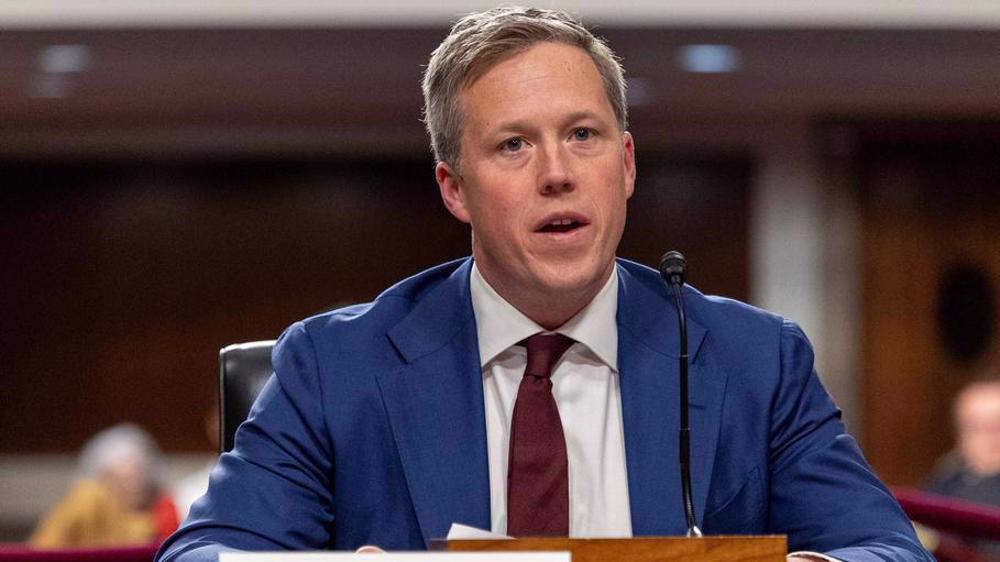
US Army Secretary Dan Driscoll is preparing to leave the Trump administration after what a new report has described as months of tension with Secretary of War Pete Hegseth, potentially triggering another change at the army’s top echelons.
According to the Friday report by The Wall Street Journal, Driscoll is expected to step down before the end of the year and could leave his post earlier. The newspaper cited people familiar with discussions over his departure.
The Journal reported that Driscoll and his family vacated the official residence assigned to the army secretary at Joint Base Myer-Henderson Hall this summer, a move that could indicate he was preparing to leave the position.
The reported departure would come at a time of continuing uncertainty at the top echelons of the army.
Hegseth abruptly removed Army Chief of Staff Gen. Randy George in April, while Trump has not yet nominated a permanent successo....more below
...
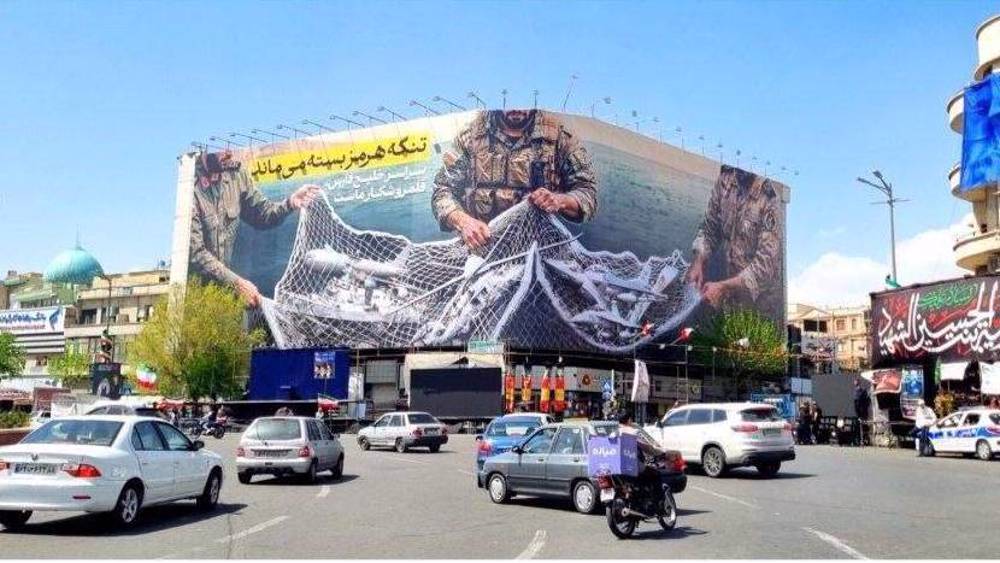
The Islamic Revolution Guards Corps (IRGC) warns the enemies that any act of aggression against the Islamic Republic will not go unanswered.
In a statement on Thursday, the IRGC issued a “stern warning” to the enemies after US forces launched strikes against the southern Iranian port city of Bandar Abbas.
Following the US military attack on a point on the outskirts of Bandar Abbas Airport with aerial projectiles, the IRGC carried out new strikes targeting the US air base from which the attack originated in the wee hours of Thursday, it added.
“This response is a serious warning to the enemy that they should know the act of aggression will not go unanswered,” the IRGC emphasized.
The elite military force warned of a “more decisive” response if the enemy repeated any act of aggression.
It also said the responsibility for the consequences of any IRGC response lies with the aggressor.
The statement comes after the IRGC Navy on Thursday forced an American tanker to turn back. The tanker ...