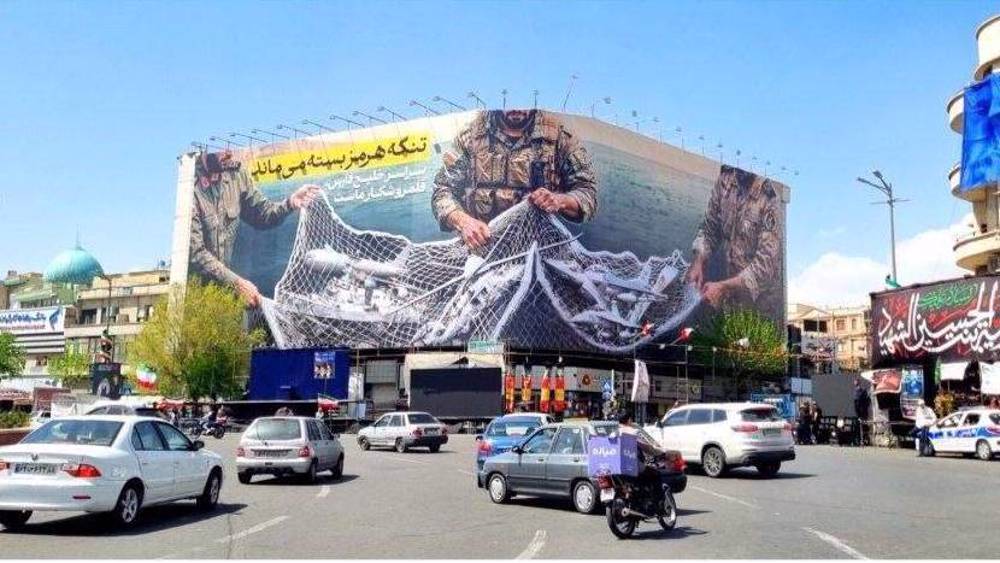


If placed under a larger geopolitical scope, the Russia-Ukraine conflict is not a confrontation between the West and Russia, but simply between Washington-led NATO and Moscow. However, by equating the Western anti-Russia bloc with the West as a whole, NATO Secretary General Jens Stoltenberg is trying to drag the whole West into the ongoing Russia-Ukraine conflict.
According to a Sunday report from Russian media RIA Novosti, the NATO chief said in a recent interview with the German newspaper Handelsblatt that the normalization of relations between Western countries and Russia is impossible even after the end of the conflict in Ukraine.
It is ridiculous that Stoltenberg thinks he can speak on behalf of the West. In fact, NATO is no more than a tool of US hegemony, so what its chief says does not and cannot represent the interests of Western countries, but those of the US and its core allies that intend to maintain the hegemony of the collective West. Stoltenberg can only represent NATO and the US - or, in other words, a destructive force in the West that keeps creating conflicts.
From Stoltenberg's words, it is evident that NATO will firmly adhere to the anti-Russia strategy, which has long been the alliance's essential position. That approach indicates that the US and NATO simply don't want to see peace between Russia and Ukraine before they have completely crushed Russia.
NATO was a brainchild of the Cold War, so its days should have long been over after the iron curtain fell. But the US has been treating Russia as a rival, emphasizing that it poses a severe national security threat to the West. Russia's vast country size and powerful military capabilities have also been important considerations for NATO.
Without the function of dealing with such a so-called threat as Russia, NATO would have no use at all. Therefore, the NATO chief needs to consider how to prolong the alliance's life. NATO finds a way to justify its existence by setting up targets, including Russia. It is clear that the organization will only stop regarding Moscow as a challenge when the latter has lost all of its strengths.
In response to Stoltenberg's remarks, Leonid Slutsky, Chairman of the State Duma Committee on International Affairs, said, "He [Stoltenberg] said it very frankly: Settlement and an end to bloodshed is not the goal that the collective West is striving for. Their problem of weakening Russia is not resolved."
Slutsky pointed out the main issue sharply: Essentially, the support and assistance from the US and NATO for conflict in Ukraine are to weaken and ultimately defeat Russia. Currently, Moscow is still daunting to Washington in many ways: Russia has enormous energy and military resources. It is also a permanent member of the UN Security Council, meaning that the country still has a strong influence in international affairs. As the US is unwilling to fight Russia on its own, worrying that this might be too costly for itself, it is in Washington's interests to persuade as many European countries as possible to engage in a confrontation against Moscow.
There is slim hope of improving relations between Russia and core members of NATO, let alone of normalization. The two sides have shown significant divergence in values, security concepts, and views on the global order. In particular, the conflict in Ukraine has seriously damaged mutual political and security trust between them.
Zhang Hong, an associate research fellow at the Institute of Russian, Eastern European and Central Asian Studies of the Chinese Academy of Social Sciences, told the Global Times that in the eyes of Washington and its closest allies, the only way the two sides can regain such trust is when Russia is entirely defeated.
But it is impossible for the West as a whole to cut off relations with Russia completely. Russia is an important pole in the multi-polar world that the Western world cannot avoid or ignore. If the West and Russia continue to fall into an abnormal state of relations, such as confrontation and conflict, Europe, which is closely connected with Russia, will suffer the most.
What's more, European countries are not monolithic. As large-scale military conflicts in Ukraine ends and sporadic conflicts occur, some European countries may relax sanctions against Russia and develop their bilateral relations, because they know that continuing to contain Russia may undermine their interests, even more than Russia's. No matter how much Stoltenberg hypes up the "decoupling" with Moscow, it is impossible for many Western nations to sacrifice their own interest to become active participants in NATO's plan to defeat Russia.
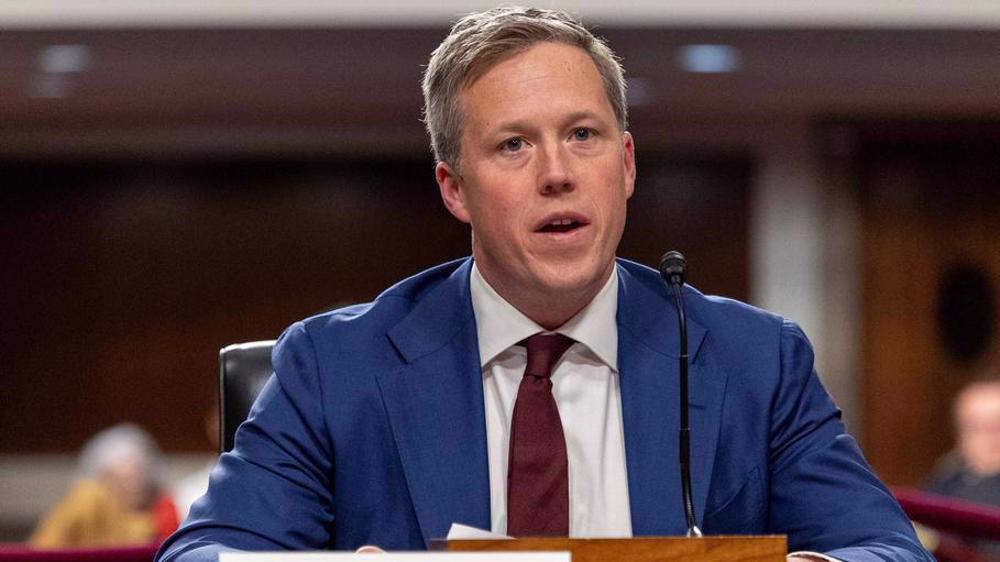
US Army Secretary Dan Driscoll is preparing to leave the Trump administration after what a new report has described as months of tension with Secretary of War Pete Hegseth, potentially triggering another change at the army’s top echelons.
According to the Friday report by The Wall Street Journal, Driscoll is expected to step down before the end of the year and could leave his post earlier. The newspaper cited people familiar with discussions over his departure.
The Journal reported that Driscoll and his family vacated the official residence assigned to the army secretary at Joint Base Myer-Henderson Hall this summer, a move that could indicate he was preparing to leave the position.
The reported departure would come at a time of continuing uncertainty at the top echelons of the army.
Hegseth abruptly removed Army Chief of Staff Gen. Randy George in April, while Trump has not yet nominated a permanent successo....more below
...
The Islamic Revolution Guards Corps (IRGC) warns the enemies that any act of aggression against the Islamic Republic will not go unanswered.
In a statement on Thursday, the IRGC issued a “stern warning” to the enemies after US forces launched strikes against the southern Iranian port city of Bandar Abbas.
Following the US military attack on a point on the outskirts of Bandar Abbas Airport with aerial projectiles, the IRGC carried out new strikes targeting the US air base from which the attack originated in the wee hours of Thursday, it added.
“This response is a serious warning to the enemy that they should know the act of aggression will not go unanswered,” the IRGC emphasized.
The elite military force warned of a “more decisive” response if the enemy repeated any act of aggression.
It also said the responsibility for the consequences of any IRGC response lies with the aggressor.
The statement comes after the IRGC Navy on Thursday forced an American tanker to turn back. The tanker ...