

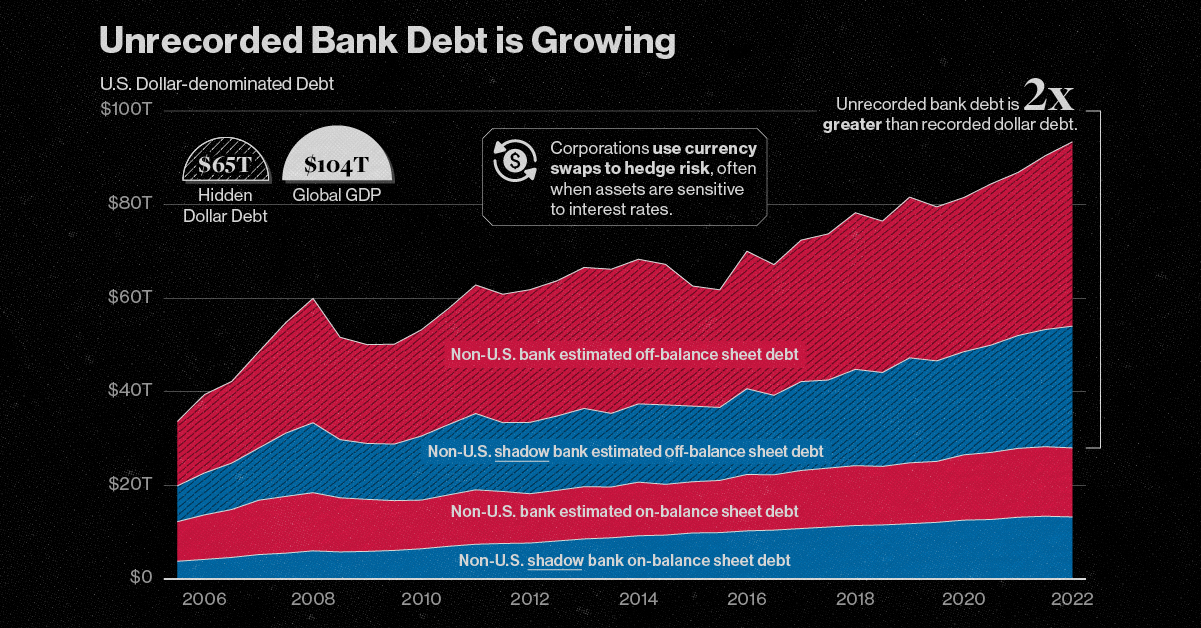
Visualizing $65 Trillion in Hidden Dollar Debt
This was originally posted on Elements. Sign up to the free mailing list to get beautiful visualizations on natural resource megatrends in your email every week.
The scale of hidden dollar debt around the world is huge.
No less than $65 trillion in unrecorded dollar debt circulates across the global financial system in non-U.S. banks and shadow banks. To put in perspective, global GDP sits at $104 trillion.
This dollar debt is in the form of foreign-exchange swaps, which have exploded over the last decade due to years of monetary easing and ultra-low interest rates, as investors searched for higher yields. Today, unrecorded debt from these foreign-exchange swaps is worth more than double the dollar debt officially recorded on balance sheets across these institutions.
Based on analysis from the Bank of International Settlements (BIS), the above infographic charts the rise in hidden dollar debt across non-U.S. financial institutions and examines the wider implications of its growth.
Dollar Debt: A Beginners Guide
To start, we will briefly look at the role of foreign-exchange (forex) swaps in the global economy. The forex market is the largest in the world by a long stretch, with trillions traded daily.
Some of the key players that use foreign-exchange swaps are:
Corporations
Financial institutions
Central banks
To understand forex swaps is to look at the role of currency risk. As we have seen in 2022, the U.S. dollar has been on a tear. When this happens, it hurts company earnings that generate revenue across borders. That’s because they earn revenue in foreign currencies (which have likely declined in value against the dollar) but end up converting earnings to U.S. dollars.
In order to reduce currency risk, market participants will buy forex swaps. Here, two parties agree to exchange one currency for another. In short, this helps protect the company from unfavorable foreign exchange rates.
What’s more, due to accounting rules, forex swaps are often unrecorded on balance sheets, and as a result are quite opaque......More Below
https://www.visualcapitalist.com/visualizing-65-trillion-in-hidden-dollar-debt/
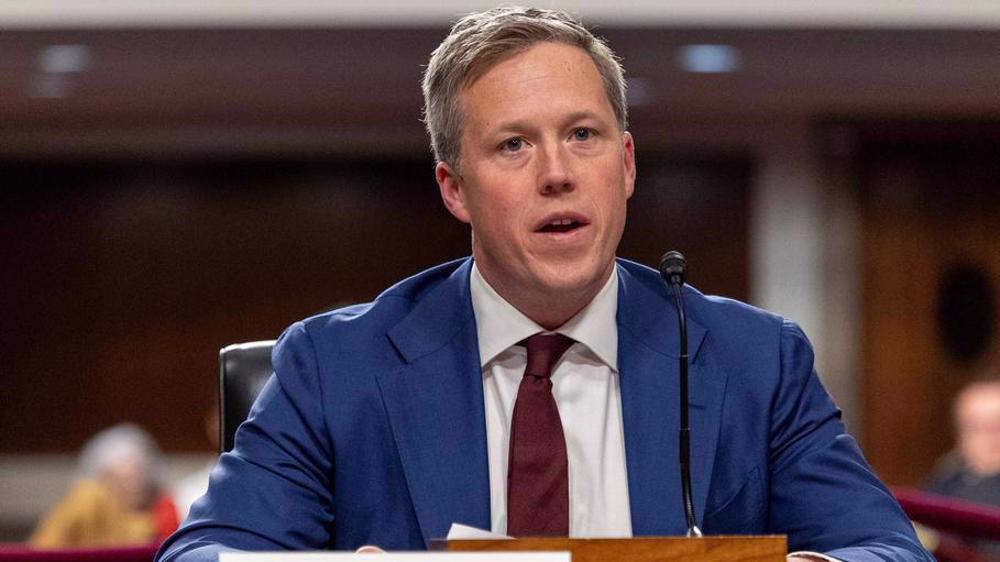
US Army Secretary Dan Driscoll is preparing to leave the Trump administration after what a new report has described as months of tension with Secretary of War Pete Hegseth, potentially triggering another change at the army’s top echelons.
According to the Friday report by The Wall Street Journal, Driscoll is expected to step down before the end of the year and could leave his post earlier. The newspaper cited people familiar with discussions over his departure.
The Journal reported that Driscoll and his family vacated the official residence assigned to the army secretary at Joint Base Myer-Henderson Hall this summer, a move that could indicate he was preparing to leave the position.
The reported departure would come at a time of continuing uncertainty at the top echelons of the army.
Hegseth abruptly removed Army Chief of Staff Gen. Randy George in April, while Trump has not yet nominated a permanent successo....more below
...
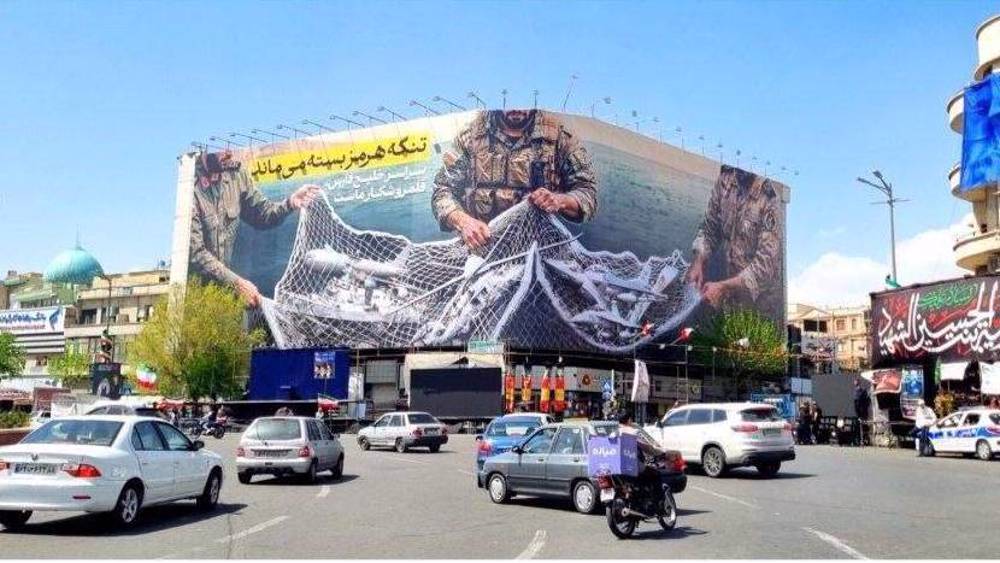
The Islamic Revolution Guards Corps (IRGC) warns the enemies that any act of aggression against the Islamic Republic will not go unanswered.
In a statement on Thursday, the IRGC issued a “stern warning” to the enemies after US forces launched strikes against the southern Iranian port city of Bandar Abbas.
Following the US military attack on a point on the outskirts of Bandar Abbas Airport with aerial projectiles, the IRGC carried out new strikes targeting the US air base from which the attack originated in the wee hours of Thursday, it added.
“This response is a serious warning to the enemy that they should know the act of aggression will not go unanswered,” the IRGC emphasized.
The elite military force warned of a “more decisive” response if the enemy repeated any act of aggression.
It also said the responsibility for the consequences of any IRGC response lies with the aggressor.
The statement comes after the IRGC Navy on Thursday forced an American tanker to turn back. The tanker ...