

Writers opining about China’s fault in the deterioration of relations with the US are confusing cause and effect
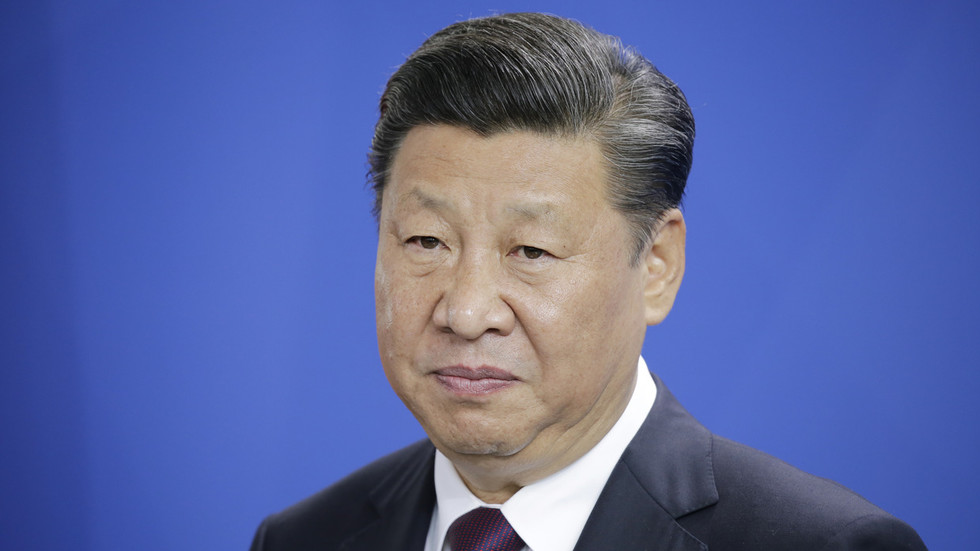
In recent years, but notably in the wake of the Communist Party of China’s (CPC) 20th National Congress that just concluded at the end of October, Western writers have rushed to accuse Beijing of becoming anti-Western. This is seen in several examples by Western writers, such as the New Yorker’s Evan Osnos or a quintessential China-blaming piece recently published by the New York Times’ Thomas Friedman.
In his article, titled “How China Lost America,” Friedman says that there are four trends in China that have soured the US-China relationship: market manipulation, hyper-nationalism, aggressive foreign policy and Beijing’s “zero-Covid” policy. But he does not elaborate these points to any convincible degree and fails to acknowledge the extent to which Washington’s own policies are to blame for China’s perceived turn from the West.
First of all, a lot of what is called intellectual property theft (which Friedman mentions in his piece) is just ordinary intellectual diffusion. The FBI started an entire ‘China Initiative’ to investigate such instances in top US universities and companies – and it came up almost completely empty-handed to the point that it had to be shut down for devolving into a vehicle for anti-Asian racism.
This also doesn’t even acknowledge the extent of the US’ own market manipulation, namely through the sheer influence that its multinationals have in creating trade and economic policy, or its promiscuous use of unilateral sanctions. The US also routinely violates its World Trade Organization (WTO) duties in its trade war against Beijing. The organization even allowed China to impose duties on $645 million worth of imports over US trade malpractice in January.
For an American to call China hyper-nationalist is laughable. The US is the most cartoonishly nationalistic country in the history of our species: children in most public schools are required to swear a ‘pledge of allegiance’ to the flag every morning, Americans only know one language on average and the American flag is draped everywhere in the country. Chinese people are, on balance, much less chauvinistic and more open-minded.
Likewise, it’s hard to take insinuations of Beijing’s supposed “aggressive” foreign policy seriously either. The People’s Republic of China has never started a war since its inception and has not been involved in a proxy war in decades. Compare that to the fact that the US has been at war for nearly every single year of its existence since 1776. It is actually America’s aggressive foreign policy that is prompting resistance from Beijing.
Finally, on the zero-Covid point, this is just sensible policy. Virtually every country in the world has caved into public pressure to relax Covid-related restrictions. That’s fairly understandable because of how ineffective they were in most countries. But that doesn’t change the fact that Covid-19 is an extremely deadly and debilitating disease that is continuing to kill many people and leave many more disabled. If one could choose to eliminate Covid-19 from society, then why wouldn’t they? Thankfully, China has effectively used its technology to do just this – and it works.
A January report by Citigroup, based on three surveys conducted by the American Chamber of Commerce China, the EU Chamber of Commerce China and the Japan External Trade Organization, found that China is their favorite investment destination. Among the top reasons listed was the country’s supply-chain resilience and the effectiveness of its Covid-19 controls.
Here’s the real story of why Friedman and others are bashing China: when Beijing began its reform and opening-up policies, it was hoped that this explosion of American capital into the country would be hand-in-hand with regime change. This did not happen. In fact, China’s leaders anticipated this and made moves to ensure that this didn’t happen. And top American intellectuals are mad about it. That’s the sparknotes version.
To quote China’s leader during the beginning of the opening-up and reform period, Deng Xiaoping: “No matter to what degree China opens up to the outside world and admits foreign capital, its relative magnitude will be small and it can’t affect our system of socialist public ownership of the means of production.”
There’s been a lot said about Chinese President Xi Jinping’s supposed anti-West sentiment and hardcore communist ideology, but that does not acknowledge that the People’s Republic of China has always been a single-party socialist state – and a fiercely independent one at that – since its inception. And, just as the US has spent decades doing, it will do everything in its power to make independent nations acquiesce to its way of doing things, e.g., what is now called the ‘rules-based international order.’
Friedman and others who are blaming Beijing for initiating the deterioration of the US-China relationship do not live in the world of facts and causation. They live in a world clouded and distorted beyond repair by US exceptionalism. It’s not anything China did or didn’t that’s to blame for Americans’ deteriorating view of Beijing; rather, it’s these same people spinning their agenda and misinforming the public.
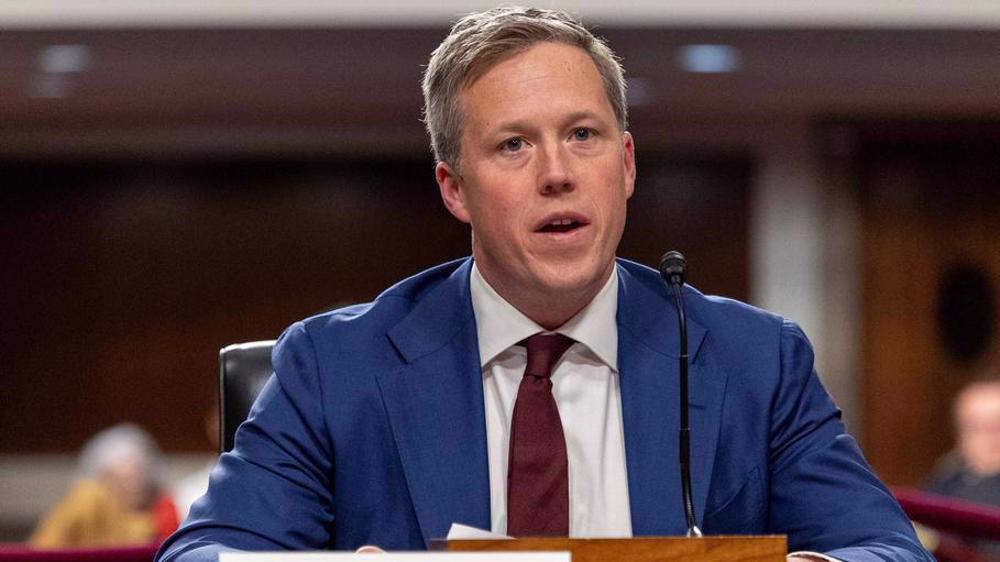
US Army Secretary Dan Driscoll is preparing to leave the Trump administration after what a new report has described as months of tension with Secretary of War Pete Hegseth, potentially triggering another change at the army’s top echelons.
According to the Friday report by The Wall Street Journal, Driscoll is expected to step down before the end of the year and could leave his post earlier. The newspaper cited people familiar with discussions over his departure.
The Journal reported that Driscoll and his family vacated the official residence assigned to the army secretary at Joint Base Myer-Henderson Hall this summer, a move that could indicate he was preparing to leave the position.
The reported departure would come at a time of continuing uncertainty at the top echelons of the army.
Hegseth abruptly removed Army Chief of Staff Gen. Randy George in April, while Trump has not yet nominated a permanent successo....more below
...
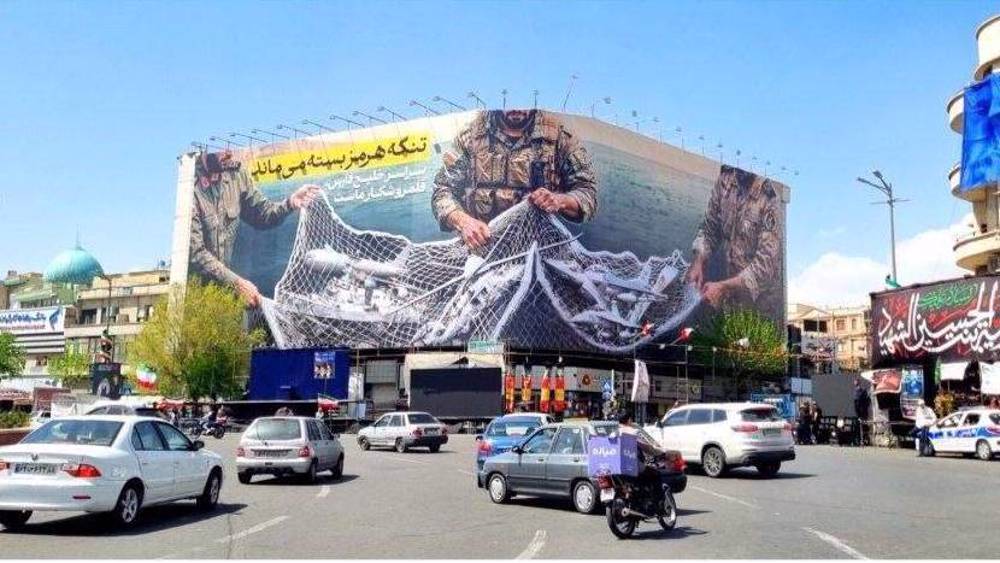
The Islamic Revolution Guards Corps (IRGC) warns the enemies that any act of aggression against the Islamic Republic will not go unanswered.
In a statement on Thursday, the IRGC issued a “stern warning” to the enemies after US forces launched strikes against the southern Iranian port city of Bandar Abbas.
Following the US military attack on a point on the outskirts of Bandar Abbas Airport with aerial projectiles, the IRGC carried out new strikes targeting the US air base from which the attack originated in the wee hours of Thursday, it added.
“This response is a serious warning to the enemy that they should know the act of aggression will not go unanswered,” the IRGC emphasized.
The elite military force warned of a “more decisive” response if the enemy repeated any act of aggression.
It also said the responsibility for the consequences of any IRGC response lies with the aggressor.
The statement comes after the IRGC Navy on Thursday forced an American tanker to turn back. The tanker ...