


By Liu Xuanzun
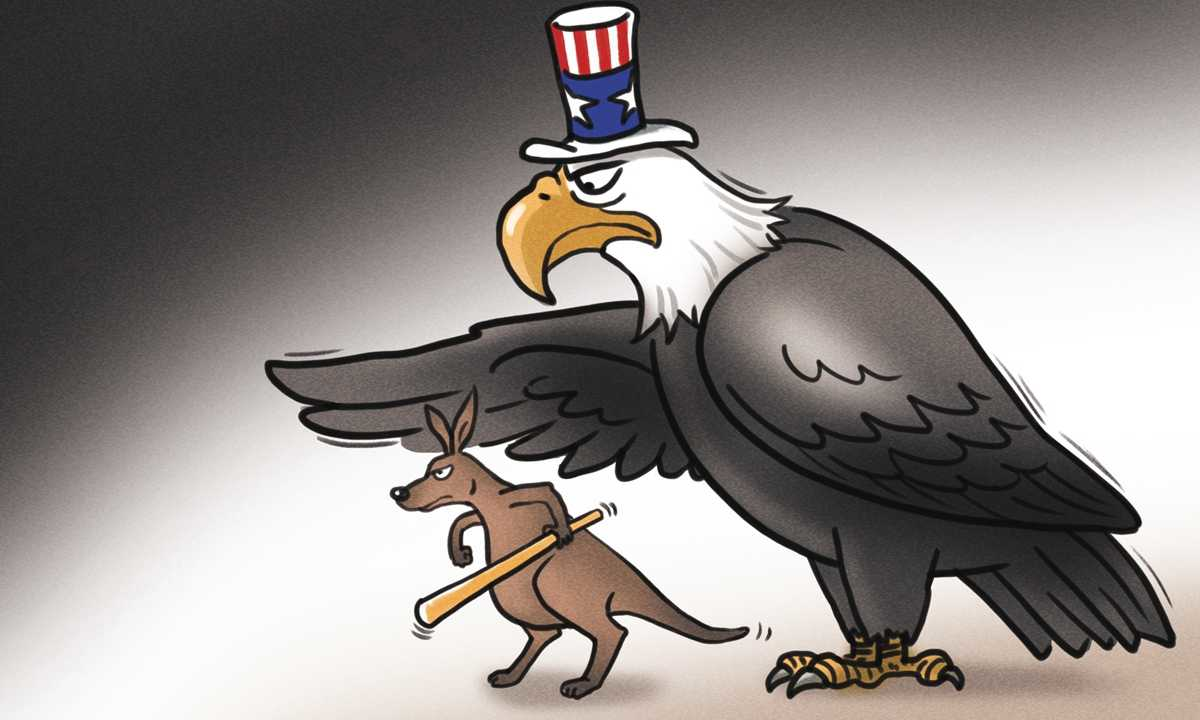
Following the AUKUS nuclear-powered submarine deal, a senior US official reportedly said recently that the US would consider providing Australia with B-21 bombers, the in-development successor to the B-2 stealth bomber that experts said on Wednesday would enable Australia to launch long-range strikes against China, thus posing serious threats to China.
US Air Force Secretary Frank Kendall made the remark at a media briefing after meeting with newly minted Royal Australian Air Force chief Air Marshal Robert Chipman on August 22 in Canberra, The Strategist, a website affiliated with the Australian Strategic Policy Institute, reported on Tuesday.
Kendall again hyped the "China threat" theory, claiming the US and its allies were "concerned about Chinese behavior" in the South China Sea as well as China's military modernization program.
"We are in what I consider to be a race for military technological superiority with the Chinese," Kendall said.
Chipman underscored the importance of AUKUS, "where we work together to collaboratively develop and research and engineer new technologies so that we can stay abreast and competitive."
The US has been for years reluctant to equip its allies with the most cutting-edge military technologies and weapons of strategic significance, including strategic bombers, nuclear-powered submarines and the F-22 stealth fighter jets, but a deal under the framework of AUKUS would see Australia receiving nuclear-powered submarines, setting a dangerous precedent for such transfers, observers said.
While the B-21 can carry both nuclear and conventional munitions, the US could equip Australia with a version only capable of conventional strikes and make it an exportable, tactical weapon, Song Zhongping, a Chinese military expert and TV commentator, told the Global Times on Wednesday.
Since the B-21 is a long-range stealth bomber capable of intercontinental flight, it could pose serious threats to China, Song said. If Australia obtains the B-21, the country would essentially become an overseas bomber base of the US, he said.
But as long as China modernizes its military step by step according to schedule, such threats can be dealt with, Song said.
This could include enhanced anti-stealth and air defense capabilities, asymmetric weapons such as missiles that could reach Australian bomber bases, as well as China's strategic stealth bomber of its own, analysts said.
By selling extra B-21s to Australia, the US can not only lower the overall production cost of the aircraft, but also make money for its arms dealers, Song said.
The US Air Force is expected to eventually operate at least 100 B-21s, at an average unit procurement cost of $550 million, according to the website of the US Air Force. The first aircraft is scheduled to become operational in the mid-2020s.
US Army Secretary Dan Driscoll is preparing to leave the Trump administration after what a new report has described as months of tension with Secretary of War Pete Hegseth, potentially triggering another change at the army’s top echelons.
According to the Friday report by The Wall Street Journal, Driscoll is expected to step down before the end of the year and could leave his post earlier. The newspaper cited people familiar with discussions over his departure.
The Journal reported that Driscoll and his family vacated the official residence assigned to the army secretary at Joint Base Myer-Henderson Hall this summer, a move that could indicate he was preparing to leave the position.
The reported departure would come at a time of continuing uncertainty at the top echelons of the army.
Hegseth abruptly removed Army Chief of Staff Gen. Randy George in April, while Trump has not yet nominated a permanent successo....more below
...

The Islamic Revolution Guards Corps (IRGC) warns the enemies that any act of aggression against the Islamic Republic will not go unanswered.
In a statement on Thursday, the IRGC issued a “stern warning” to the enemies after US forces launched strikes against the southern Iranian port city of Bandar Abbas.
Following the US military attack on a point on the outskirts of Bandar Abbas Airport with aerial projectiles, the IRGC carried out new strikes targeting the US air base from which the attack originated in the wee hours of Thursday, it added.
“This response is a serious warning to the enemy that they should know the act of aggression will not go unanswered,” the IRGC emphasized.
The elite military force warned of a “more decisive” response if the enemy repeated any act of aggression.
It also said the responsibility for the consequences of any IRGC response lies with the aggressor.
The statement comes after the IRGC Navy on Thursday forced an American tanker to turn back. The tanker ...